

Speakers
Keynote Speakers


Prof. Mahdi Jalili
RMIT University, Melbourne, Australia
AI and Optimisation for Integrating Renewable Energy and Electric Vehicles into the Grid
Abstract:
The transition to a clean economy requires sourcing electricity from renewable energy and decarbonising the energy and transport sectors. Distribution grids face significant challenges in efficiently integrating distributed energy resources, including rooftop solar, batteries and electric vehicles. To avoid voltage and thermal issues, grid enhancements are often required to accommodate excess solar generation and extreme power imports resulting from household and transport electrification. These investments are often passed directly on to customers, making network charges less affordable. In this talk, I will discuss potential solutions and how AI and optimisation technologies can be used to optimise the integration of distributed energy resources at minimal cost. I will also present several Australian case studies.
Bio:
Mahdi Jalili is a Distinguished Professor of AI and Electrical Engineering at RMIT University, Melbourne, Australia. He is an Australian Research Council Fellow and Director of the ARC Industrial Transformation Training Centre in Electrification, a national centre involving four Australian universities and 12 government and industry partners. He is also the Founding Director of the RMIT EV-Grid Integration Lab, which focuses on the integration of electric vehicles, renewable energy, battery storage and other distributed energy resources into electricity grids. His research interests include energy analytics, complex systems, AI, machine learning and optimisation, with a particular focus on their applications to renewable energy integration, electric vehicle charging, energy management and grid flexibility. His research aims to translate advanced AI and optimisation technologies into practical solutions that support Australia’s transition to a resilient, affordable and net-zero energy future.

Assoc. Prof.
Baljit Singh a/l Bhathal Singh
Universiti Teknologi MARA (UiTM), Malaysia
Powering ASEAN’s Intelligent Energy Future Through AI and Smart Grids
Abstract:
ASEAN’s growing energy demand, increasing renewable energy penetration, and rapid electrification are transforming the region’s power systems. Smart grids, supported by artificial intelligence, advanced sensing, energy storage, digital platforms, and intelligent control, are becoming increasingly important in ensuring reliable, flexible, efficient, and sustainable electricity networks. This abstract explores how AI-enabled smart grids can accelerate ASEAN’s transition towards a cleaner, smarter, and more resilient energy future. Emerging applications of artificial intelligence in renewable energy forecasting, demand prediction, predictive maintenance, fault detection, energy management, and real-time grid optimisation are highlighted. Particular emphasis is placed on the integration of variable renewable energy sources such as solar and wind, together with battery energy storage systems, electric vehicles, distributed generation, and microgrids. The growing roles of digital twins, Internet of Things technologies, and data-driven decision-making in improving grid visibility, system efficiency, and operational reliability are also considered. Key challenges facing ASEAN include ageing infrastructure, cybersecurity risks, interoperability, investment requirements, regulatory readiness, and cross-border electricity integration. Addressing these challenges will require stronger regional collaboration, supportive policies, technological innovation, and continuous workforce development. The transition towards intelligent, interconnected, and adaptive power systems offers ASEAN significant opportunities to strengthen energy security, maximise renewable energy utilisation, enhance grid resilience, and advance towards a low-carbon and digitally enabled energy future.
Bio:
Assoc. Prof. Ir. Ts. Dr. Baljit Singh is an academic and researcher at the Faculty of Mechanical Engineering and a senior research Fellow of Solar Research Institute (SRI), Universiti Teknologi MARA (UiTM), Malaysia, with expertise in renewable energy, thermal systems, energy efficiency, and intelligent energy technologies. His research focuses on solar photovoltaic and solar thermal systems, thermoelectric power generation, waste heat recovery, hybrid energy systems, and the application of artificial intelligence and computational modelling for energy prediction and optimisation. He has led and contributed to research projects involving AI-enhanced solar energy forecasting, photovoltaic performance optimisation, thermal energy recovery, passive cooling, and sustainable energy systems. His work integrates experimental investigation with numerical tools such as ANSYS Fluent and MATLAB to improve the performance, reliability, and efficiency of emerging energy technologies. Beyond research, Dr. Baljit is actively involved in engineering education, professional bodies, technical evaluation, accreditation, and the supervision of undergraduate and postgraduate research. His current interests increasingly address the convergence of renewable energy, artificial intelligence, digitalisation, energy storage, and smart grid technologies. These areas strongly align with ASEAN’s transition towards more intelligent, interconnected, resilient, and low-carbon power systems.


Dr. Weerayut Srithiam
Electricity Generating Authority of Thailand (EGAT)
Integration, Application, and National Benefits of Demand Response through the Demand Response Control Center (DRCC)
Abstract:
Due to the current economic and environmental conditions, energy consumers are increasingly transforming into Prosumers, who can both consume and produce electricity. At the same time, rapidly developing technologies such as Solar Rooftop, Battery Energy Storage Systems (BESS), and Internet of Things (IoT) are being adopted and applied as energy-saving measures at the individual level. However, not everyone in the general public has sufficient basic knowledge of technology or understands how these technologies can be effectively applied. Furthermore, establishing connectivity among individual energy users is essential to create collaboration and coordination at the regional and national levels. Therefore, appropriate measures, incentives, and mechanisms, including both technical and financial aspects, are necessary. These are also important areas that new-generation energy entrepreneurs and business operators need to understand and develop. The implementation of energy monitoring systems to establish an accurate Baseline is another essential element for initiating energy-saving measures. Connectivity between energy devices and the operating systems used to control energy systems within homes or buildings is also crucial. If such systems are designed as closed systems and are unable to receive commands or signals from external platforms, this may become a significant barrier to further development and to realizing the full benefits of an integrated energy management system. This article introduces the basic infrastructure and essential equipment required to implement Demand Response (DR) for different categories of electricity users. It also presents approaches for establishing connectivity from individual homes and industrial facilities to an Aggregator, and subsequently to a Demand Response Control Center. If the required investment is reasonable and economically worthwhile for electricity users to participate in Demand Response programs, the overall benefits can extend beyond individual users to the country as a whole, as well as to the environment and climate. By reducing energy consumption and improving the efficiency of electricity use, Demand Response can contribute to the transition toward Net Zero. Most importantly, all sectors can participate in this transition through practical implementation, with technology serving as an enabler that provides guidance, automation, and greater convenience for users while supporting more efficient and sustainable energy management.
Bio:
Dr. Weerayut Srithiam is the Chief of the Energy Solutions Department, Business Innovation Management Division at the Electricity Generating Authority of Thailand (EGAT). He has extensive experience in energy systems, smart grids, renewable energy, energy storage, investment analysis, and business development. He holds a Master of Science in Smart Grid (Electrical Engineering) from Heriot-Watt University, UK, a Master of Economics in Project Analysis from the National Institute of Development Administration (NIDA), Thailand, and bachelor’s degrees in Electrical Engineering from Kasetsart University and Economics from Sukhothai Thammathirat University. He has been with EGAT since 2010, where he has held various engineering, planning, energy storage, investment analysis, and energy solutions leadership positions.


Assoc. Prof. Nguyen Duc Tuyen
School of Electrical and Electronic Engineering,
Hanoi University of Science and Technology
AI-Driven Data Centers: From Massive Electricity Loads to Flexible Energy Resources
Abstract:
The rapid growth of Artificial Intelligence (AI), cloud computing, and digital services is transforming data centers into rapidly expanding and highly dynamic electricity loads. AI workloads introduce variable and bursty power demand, creating new challenges for power-system operation, power quality, electricity markets, and decarbonization. At the same time, the computational flexibility of data centers creates an opportunity to transform them from passive consumers into controllable and flexible energy resources. This keynote explores the emerging interaction between AI, data centers, energy storage, renewable energy, and future power systems. A workload–facility–point of common coupling (PCC) framework is introduced to examine how computational events and IT-power variations propagate through servers, power-conversion systems, UPS, cooling, protection, and facility-level controls before reaching the grid. Different modeling approaches are also discussed in terms of physical boundaries, timescales, grid applications, and validation. The presentation then examines how workload scheduling, power capping, geographically distributed computing, renewable energy integration, and Battery Energy Storage Systems (BESS) can be coordinated to improve both data-center efficiency and grid performance. An AI-based energy-management framework combining power capping and BESS operation is presented as an illustrative case, demonstrating the potential to reduce energy costs, mitigate peak demand, and smooth power fluctuations while maintaining Quality of Service (QoS). Finally, the keynote discusses future grid-interactive AI data centers and identifies key research needs in cross-scale modeling, limited-data parameter identification, model validation, and the development of public datasets linking workload, IT, facility, and grid-level measurements. The central message is that AI data centers should not be viewed solely as growing electricity consumers; when properly managed, they can become important sources of flexibility and active participants in future smart energy systems.
Bio:
Assoc. Prof. Nguyen Duc Tuyen is a lecturer at the School of Electrical and Electronic Engineering, Hanoi University of Science and Technology (HUST) and a member of IEEE. He obtained his Ph.D. in Japan and spent the period 2008–2018 studying and working there. Assoc. Prof. Tuyen has established extensive international collaborations with partners in Japan, Australia, Taiwan, South Korea, and the United Kingdom. He has published around 200 scientific papers in reputable international journals and conferences, and has been actively involved in training and supervising graduate and doctoral students in the field of modern energy and power systems. He is also a member of the editorial boards of the Journal of Science and Technology (JST) and the MCA journal in Vietnam. He currently serves as the Chairman of the IEEE Power & Energy Society (PES) Vietnam Chapter.
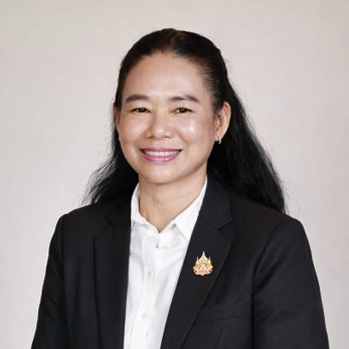
Ms. Munlika Sompranon
Department of Alternative Energy Development and Efficiency (DEDE),
Ministry of Energy, Thailand
Solar Energy and Smart Grids: Thailand’s Journey from Policy to Implementation
Abstract:
Thailand’s transition towards a low-carbon energy system requires both increased solar energy deployment and a more flexible, intelligent, and resilient electricity grid. This presentation examines Thailand’s progress from renewable energy policy formulation to practical implementation across utility-scale, commercial, household, and community applications. It highlights the role of PV, smart grids, energy storage, digital energy management, and other distributed energy resources in integrating higher levels of solar power. The presentation also addresses key challenges, including grid capacity, interconnection procedures, regulatory readiness, financing, technical standards, and workforce development. Drawing on Thailand’s experience, the presentation will identify priorities for accelerating solar deployment while maintaining grid reliability and energy security. It will also highlight opportunities for regional cooperation and knowledge exchange to support resilient and interconnected clean energy systems across ASEAN.
Bio:
Ms. Munlika Sompranon serves as Director of the Division of Solar Energy Development at Thailand’s Department of Alternative Energy Development and Efficiency (DEDE), Ministry of Energy, where she oversees national solar energy initiatives, drives renewable energy policy implementation, and manages strategic frameworks to support Thailand's clean energy transition. Throughout her career at the department, she has held several key leadership roles, including Director of the Energy Human Resource Development Division and Director of the Energy Cooperation Section. In these positions, she led initiatives in professional training, capacity building, international affairs, and cross-border energy cooperation. She has represented Thailand in regional and international energy forums, collaborating closely with government agencies, international organizations, and development partners. Her expertise spans solar and renewable energy development, energy policy, workforce development, and international relations—all driven by a strong commitment to advancing Thailand’s transition toward a secure, sustainable, and low-carbon energy future.